

 071 484 1010
Description
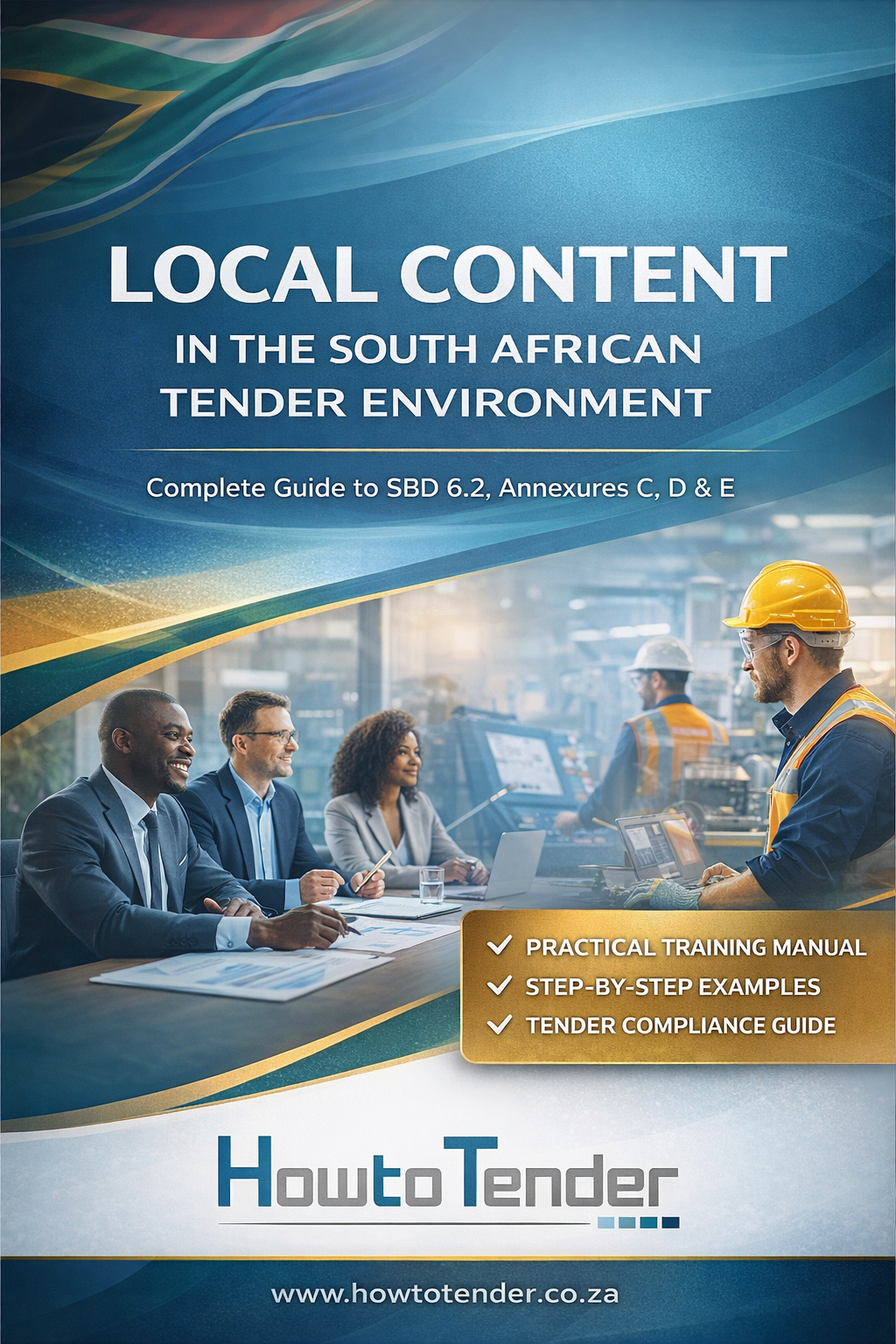
Looking for a clear explanation of Local Content requirements in South African tenders? The Local Content Instruction Manual is a practical, step-by-step e-book that explains how to calculate Local Content percentages and correctly complete SBD 6.2 forms when submitting government tenders.
Many tenders issued by government departments, municipalities and state-owned entities require bidders to meet minimum Local Production and Content thresholds for designated sectors. Failure to correctly calculate or declare Local Content can result in immediate disqualification.
This guide helps businesses understand the regulations issued by the National Treasury and the Department of Trade, Industry and Competition (DTIC), ensuring that tender submissions comply with official procurement requirements.
Why Understanding Local Content is Important
Local Content requirements are designed to support South African manufacturing, job creation and economic growth. When bidding for designated products, companies must declare the percentage of goods produced locally versus imported components.
Incorrect calculations, inconsistent pricing schedules or incomplete supporting documents often lead to non-responsive tender submissions.
The Local Content Instruction Manual explains how to avoid these mistakes and improve tender compliance.
What You Will Learn About Local Content in Tenders
Understanding Local Content Requirements in South Africa
Learn how Local Content applies in the public procurement system:
- What Local Content means in tenders
- Designated sectors for Local Production
- Minimum threshold requirements for specific industries
- When SBD 6.2 forms are required
- Role of National Treasury and DTIC regulations
- How Local Content affects tender compliance
How to Calculate Local Content Percentages Correctly
Step-by-step guidance on performing accurate calculations:
- Determining imported vs locally manufactured components
- Understanding Bills of Materials
- Calculating Local Content percentages correctly
- Applying exchange rates correctly
- Avoiding common calculation mistakes
- Ensuring alignment between pricing schedules and Local Content declarations
How to Complete SBD 6.2 Forms
Detailed explanation of the required schedules:
- Completing SBD 6.2 declarations
- Understanding Annexure C, D and E
- Supporting documentation requirements
- Supplier and manufacturer declarations
- Ensuring consistency across tender documents
- Avoiding errors that lead to disqualification
Supporting Documents Required for Local Content Compliance
Ensure all required documents are included:
- Bills of materials
- Supplier confirmations
- Import documentation
- Exchange rate calculations
- Manufacturer declarations
- Verification requirements where applicable
Practical Guidance to Improve Tender Compliance
Gain practical knowledge on:
- How Local Content is evaluated during tender adjudication
- How Local Content interacts with price and functionality scoring
- Common mistakes made when completing SBD 6.2
- Tips to improve accuracy and compliance
- Preparing supporting documentation correctly
Who Should Buy This Local Content Guide
This e-book is ideal for:
- Manufacturers bidding for government tenders
- Suppliers of designated products
- Importers required to declare Local Content percentages
- Construction material suppliers
- Engineering companies and technical suppliers
- Procurement managers and tender administrators
- Businesses responding to public sector tenders
- Companies wanting to improve SBD 6.2 compliance
- SMMEs entering the government tender market
Key Benefits of the Local Content Instruction Manual
- Learn how Local Content is calculated in South Africa
- Understand SBD 6.2 requirements step-by-step
- Improve compliance with National Treasury regulations
- Reduce risk of tender disqualification Learn how to complete Annexure C, D and E correctly
- Understand designated sector requirements
- Improve accuracy of Local Content calculations
- Suitable for beginners and experienced bidders
Product Format
Digital E-Book
Instant download after purchase.
Improve Your Tender Compliance
Understanding Local Content requirements is essential when bidding for designated sector tenders in South Africa. Businesses that correctly complete SBD 6.2 forms and provide accurate supporting documentation significantly improve their chances of submitting compliant bids.
The Local Content Instruction Manual provides the knowledge needed to confidently calculate Local Content percentages and meet tender requirements.


Divine –
Excellent
Thozamile –
Local content needed for calculation purpose